Asset Management vs. Configuration Management

Asset management and configuration management look like separate disciplines from the outside. Different teams run them. Different processes govern them. And the people who specialize in each often speak different languages. But Configuration Items (CIs) are still assets, and assets still get configured.
Cloud environments make this distinction especially clear. Building an AWS CMDB means tracking not just asset inventories, but also changing configurations, security groups, and service relationships.
So what actually separates these two practices? And why do organizations treat them as though they have nothing in common?
This guide covers both disciplines and shows where they overlap. It also makes the case that modern IT teams cannot afford to run one without the other. The need for alignment grows more urgent as environments become more complex. According to over 80% of IT leaders, visibility across assets and configurations is critical to reducing operational risk.
What is IT Asset Management?
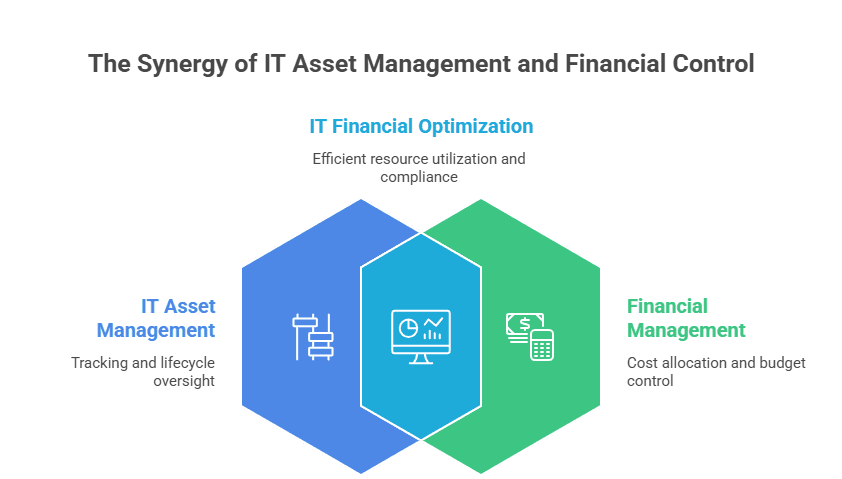
IT Asset Management (ITAM) takes responsibility for managing IT-related assets, or service assets, in IT Service Management (ITSM) terms. This includes all infrastructure, personal computing, and software assets. The focus is on understanding IT’s investment in contract and financial aspects.
One important boundary to understand is exactly where ITAM ends and the CMDB begins. Hardware assets and configuration items can be automatically linked. This keeps financial and technical data in sync rather than letting them diverge over time. Structuring ITAM roles and responsibilities explicitly ensures that financial tracking, life cycle management, and compliance are clearly owned.
Some platforms handle the financial and inventory side of ITAM well. However, bridging into configuration management typically requires a dedicated CMDB with automated discovery and relationship mapping. Without that layer, configuration-level depth is out of reach. A standalone ITAM and CMDB combination delivers what bundled platforms often cannot.
ITAM sits on the business side of IT ownership. It answers the money questions:
- How much did we spend on this infrastructure?
- Are our software licenses properly allocated?
- When does this equipment need to be replaced?
Organizations typically handle IT financial management in one of two ways. Silo-based financial management tracks costs by infrastructure type, such as servers, networking, and software. Service-based financial management groups total asset costs by the services they support.
ITAM tracks each asset’s location and usage throughout its life cycle. It also manages contract terms, vendor agreements, and the depreciation of capital assets. ITIL asset and configuration management principles cover the entire asset life cycle, from procurement or lease through assignment, ongoing operations, and eventual retirement.
Managing Software Licenses and Devices
ITAM also governs what happens when equipment reaches end-of-life. Proper disposal processes handle data security, environmental compliance, and financial write-offs so nothing falls through the cracks.
A centralized IT group, such as the help desk or technology services team, typically manages software licenses. The goal is to ensure every employee accesses only the tools they need, while avoiding over-allocation that drives up costs.
For teams running service desks with HaloITSM, Virima extends this capability through discovery-backed Halo asset management. It automatically detects installed software across the estate and reconciles usage against entitlements within the Halo workflow.
IT departments also manage their organization’s PC and mobile device inventory. This means verifying that employees use the right equipment for their roles. Devices must also be secure, backed up, and properly maintained.
Why Asset Management Matters
ITAM keeps your hardware and software inventory accurate. It ensures your organization holds only the licenses it needs, cutting waste and reducing compliance risk. Here are the core activities involved.
Tracking asset locations and states
An asset register tracks where each piece of equipment is located and what state it is in. For example, it shows whether a computer is still active or has been decommissioned. The register also tracks software licenses tied to specific computers or user accounts.
Building that register systematically starts with an IT asset management checklist. That checklist defines what to track, how to tag, and when to audit. This keeps the register accurate as the environment evolves.
Managing Software Licenses
A centralized IT group owns software license management. Their job is making sure every employee can access the tools they need. They also prevent over-allocation that quietly inflates costs.
Managing End-User Devices
IT departments need to manage their organization’s PC and mobile device inventory. This includes making sure employees use the right equipment for their roles. Devices must also be secure, backed up, and properly maintained.
Some teams rely on documentation-focused tools for centralized device records and credential storage. These work well at small scale. However, the distinction between documentation and true configuration management becomes critical as environments grow and compliance requirements tighten. When teams need CI-level detail, relationship mapping, and ITSM integration, purpose-built CMDB platforms deliver what basic asset tracking cannot.
Handling Decommissioned Assets
ITAM governs what happens when equipment reaches end-of-life. Proper disposal processes address data security, environmental compliance, and financial write-offs. This ensures nothing falls through the cracks during retirement.
Some platforms handle depreciation and physical life cycle tracking well. However, bridging into configuration management, where CI relationships and service dependencies matter, typically requires a dedicated CMDB and discovery platform.
What is Configuration Management?
Configuration management focuses on how service assets are used and set up. Unlike ITAM, it does not focus on costs, contracts, or ownership. Instead, it tracks the technical details that define how assets behave in production.
Specifically, configuration management tracks the following for each service asset:
- Usage type: Is this a personal device or an infrastructure component?
- Connected assets: What else is it linked to, including network devices?
- Supported services: Which business services depend on it?
- Relationships: How does it connect to other Configuration Items?
- Technical configuration: OS, patches, memory, storage, and network settings
Configuration Management is a Technical Practice
ITAM is primarily a business process. Configuration management, by contrast, is a technical and engineering practice. In ITIL v4 terms, this discipline falls under service asset and configuration management (SACM). SACM defines how organizations identify, control, and maintain accurate information about CIs and their relationships throughout the service life cycle.
Two aspects matter most from an ITSM perspective. Service configuration covers which assets make up an operational service and how they connect. Item-level configuration covers the technical setup of each item, including its operating system, patch level, memory, and disk capacity.
Both feed into effective IT operations, just in different ways. Service configuration helps teams know where to focus. When a CI goes down, operators need to know which services it supports before they can gauge the real impact.
Key Configuration Management Activities:
Identifying configuration items in the configuration management system
Configuration management maps the components of an application or system. It also maps how those components relate to each other and how they work together. Importantly, it tracks not just what exists but also what changes over time.
Controlling changes to assets
Change management is a core part of configuration management. It means identifying and controlling every change to assets, along with supporting processes, documentation, and configurations. This discipline reaches beyond IT systems alone. It applies to any asset that requires structured management across processes and projects.
For teams using a formal framework, ITIL v4 provides specific guidance on configuration baselines and CI identification. It also covers how SACM integrates with change control and service delivery.
Assessing change impact on services
Configuration management ensures system changes get properly authorized, documented, tested, and applied. That includes setting baselines for CIs and defining their expected configurations. Teams also monitor for drift to catch unauthorized changes early. The result is safer, more predictable changes across the environment.
Simplifying dependency identification
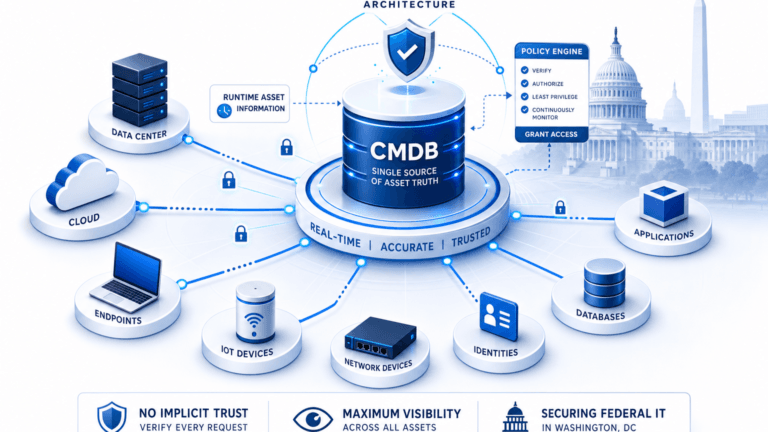
A well-maintained CMDB holds everything you need about an asset. It shows where the asset is, what state it is in, who owns it, and when it was last updated. It also enforces consistency by configuring each asset once with predefined rules. This avoids manually setting up each asset for every use case. Configuration management keeps operations consistent. Without it, root cause analysis and security gap detection become much harder. When something breaks, you cannot easily tell whether the failure is the hardware, the patch level, or the application.
Historically, vendors separated asset management and configuration management functions. That separation is one reason modern unified solutions are gaining traction, as organizations realize they need both layers working from the same record.
Traditional platforms like BMC IT asset management have historically separated these functions, which is one reason modern unified solutions are gaining traction.
How Automated Discovery Improves Configuration Management
Modern ITSM platforms have made configuration management far more practical through automated IT discovery and service mapping. Automated discovery populates the CMDB with accurate, current data about every asset it finds. That frees IT teams to focus on data quality and building the financial and management records that discovery cannot generate on its own.
What is Service Asset and Configuration Management (SACM)?
ITIL defines SACM as the practice that formally brings asset management and configuration management under one roof. SACM starts from a simple premise: these are not competing disciplines. They are two views of the same data.
SACM ensures accurate information about assets and CIs, including how they relate to each other, is available wherever and whenever teams need it. That information feeds directly into incident resolution, change management, and capacity planning. As a result, organizations that implement SACM correctly stop running ITAM and configuration management in separate silos. Instead, they treat them as two halves of one life cycle.
Asset and Configuration Management in Practice Today
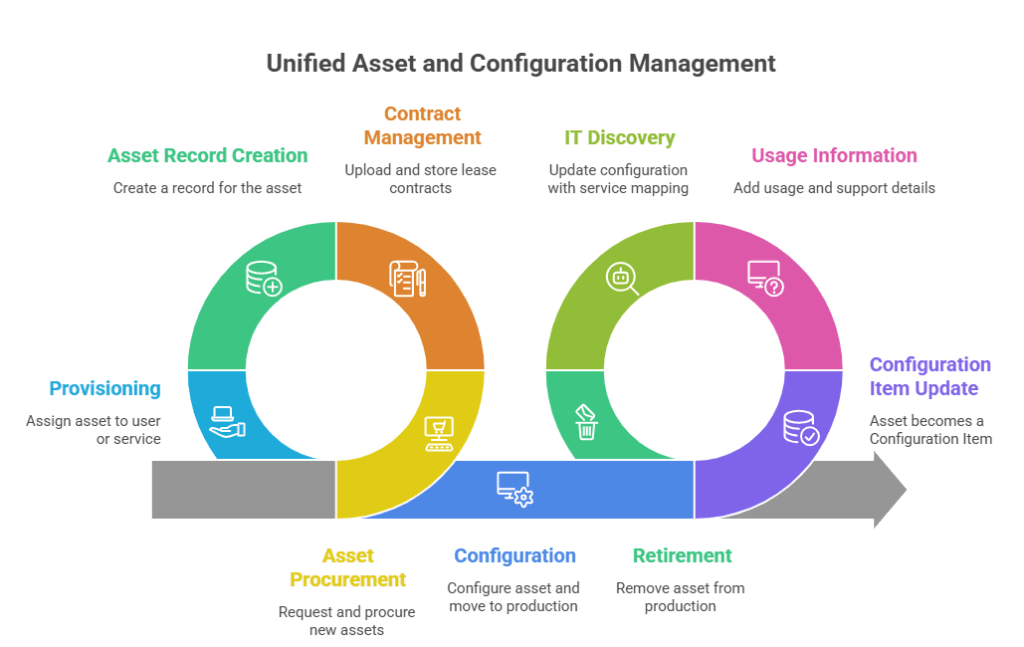
Thinking about this as “asset management vs. configuration management” misses the point. The tools available today combine both into a single, unified life cycle.
How the integrated process works
Here is how the integrated asset and configuration management process works in practice:
- A user requests an asset and the procurement team acquires it.
- If leased, the team uploads contracts and stores them in the contract management system.
- IT creates the asset record.
- IT provisions the asset to a user or assigns it to a service.
- IT configures the asset and moves it into production under change control.
- IT updates the asset record, and the item also becomes a Configuration Item.
- Support staff add usage and support information to the record.
- IT discovery finds the asset and updates its configuration record with service mapping data.
- When repair history or planned retirement warrants it, IT removes the item from production.
- The record shows the item is no longer in use.
- ITAM procedures handle the financial retirement.
- IT updates the record to reflect that the asset has been retired.
- Discovery no longer detects the asset.
This end-to-end sequence is precisely what the configuration item lifecycle covers in a modern CMDB, from the moment discovery first identifies an asset through every state change until final decommission.
Different teams own the financial side and the configuration side. However, they work with the same record. This is what lets organizations manage every item from procurement through retirement with minimal manual effort.
Managing Virtual and Cloud Assets
Virtual environments add another layer of complexity. Each virtual instance is typically treated as an asset. However, environments that spin up and shut down automatically need their own rules for managing service capacity. Once those rules are in place, the platform handles adjustments automatically. Integration with cloud management tools makes this level of life cycle management possible.
You need both, not one or the other
Asset management and configuration management are two sides of the same coin. One owns the financial picture, while the other owns usage and configuration. Running one without the other creates gaps that are difficult to close later. According to industry reports, 20-30% of IT budgets are wasted on unused or underutilized assets when visibility and control are disconnected.
What Tools Do You Need?
Getting asset and configuration management right requires tools that cover discovery, CMDB, service mapping, and life cycle management in one platform. Incorporating Asset Request and Form Management into this toolset ensures the life cycle begins with a governed intake process. This prevents ad hoc procurement from creating gaps from day one. The right toolset should be able to:
- Automate IT discovery across on-premises, cloud, and hybrid environments, including network devices
- Maintain an accurate CMDB with CI relationships and dependency data
- Map services visually so teams can assess change impact before making changes
- Track the full asset life cycle from procurement through retirement
- Integrate with your ITSM platform to connect asset data with incident, change, and request workflows
Some organizations start with open source IT asset management tools. These handle basic inventory and location tracking well. However, as environments grow in complexity, the limitations of entry-level solutions typically push organizations toward platforms that handle full life cycle automation and CMDB integration.
How Virima Unifies Asset and Configuration Management
Virima brings asset management and configuration management together in one platform. Virima ITAM, powered by IT Discovery, CMDB, and ViVID™ (Virima Visual Impact Display) service mapping, supports the full asset life cycle from procurement through retirement. Automated discovery and CMDB automation handle configuration tracking. Configurable status workflows manage each asset through stages such as requested, ordered, development, production, and decommissioned.
Virima integrates with ITSM platforms, including ServiceNow, Jira Service Management, Ivanti, Xurrent, HaloITSM, and Hornbill. As a result, asset and configuration data flows directly into your existing workflows.
With hundreds of extendable discovery probes covering on-premises, AWS, and Azure environments, Virima keeps infrastructure data current through recurring scheduled scans and agent-based monitoring. Configuration changes are reflected in the CMDB and ViVID™ service maps as scans complete. This gives IT teams a continuously updated view of their environment.
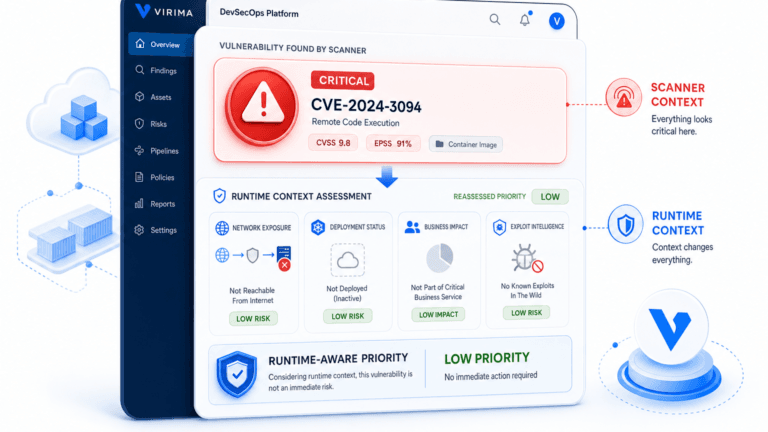
Use Virima to track hardware and software asset age, identify license compliance gaps, flag security vulnerabilities through Cybersecurity Asset Management, and keep your CMDB accurate across on-premises and cloud environments.
To see how Virima connects asset management and configuration management, explore our Trusted Runtime Truth overview at virima.com/trusted-runtime-truth/
Ready to see Virima in action? Schedule a demo at virima.com.